Showing posts with label environment. Show all posts

Friday, November 25, 2011

Climate Change Adaptation through Education


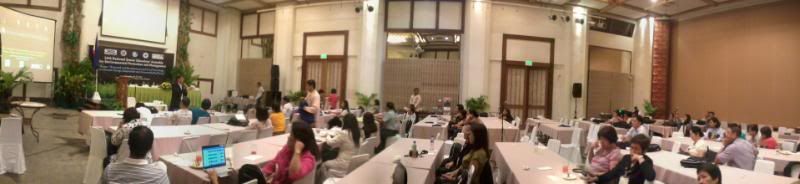
It’s another great time for educators and administrators as they got together and talk about climate change adaptation during the 16th National Senior Educators Assembly in Environmental Protection and Management. The event was held on November 24 – 25, 2011 at the Legend Hotel, Puerto Princesa City, Palawan. This was organized by the Philippine Association of Tertiary Level Educational Institutions in Environmental Protection and Management (PATLEPAM) in cooperation with the EMB-DENR and Palawan State University.
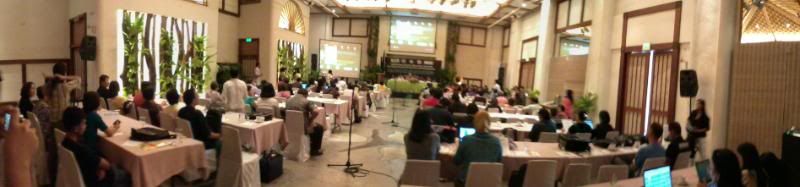
The Meeting showcased the reports of selected universities nationwide on their climate change adaptation experiences. The reports focused on the following areas: coastal and marine, health, agriculture, and forestry. These were presented respectively by Prof. Rowena Zoilo (NSTP Director, Bicol University), Dr. Roger Guzman (Executive Director, Philippine Federation for Environmental Concerns), Dr. Helen Sigua, MD (Professor, Ateneo School of Medicine and Public Health), Dr. Leonora Ngilangil (Professor, Don Mariano Marcos Memorial State University), Dr. Helen Pondevida (Research Director, University of Southeastern Philippines), Dr. Santiago Utzurrum, Jr. (Professor, Silliman University), and Dr. Olga Nuneza (Vice Chancellor for Research and Extension, Mindanao State University – Iligan Institute of Technology)
Guest speakers who opened the ceremony were the following: Dr. Teoticia Taguibao (OIC-President, Palawan State University), Dr. Ruth Guzman (VP for Research, Extension, and Information Services, Rizal Technological University and Chair, PATLEPAM Board of Directors), Ms. Gay Maureen Alagcan (Outcome Manager, MDGF 1656 Programme Management Unit, National Economic Development Authority), Mr. Reynaldo Pallaya (OIC-Provincial Environmental Management Officer, Environmental Management Bureau-DENR), and Vice Mayor Lucilo Byron of Puerto Princesa City.

Other topics presented in the meeting are the following:

Assessment on the Extent of Knowledge of Educators on Climate Change Adaptation (Ms. Sofia Alaira, UPLB-SESAM)

Assessment of the Extent of Knowledge of Administrators on Climate Change Adaptation (Dr. Ruth Guzman, RTU)

Assesment on the Extent of Climate Change (CC) Integration in Selected Higher Education Curricula, and the Enhanced Syllabi with CC Concerns (Dr. Cely Binoya, CBSU)

Resource Inventory on Climate Change Adaptation (Dr. Ninfa Pelea, BU)

Following the presentations is the open forum and the PATLEPAM Business Meeting.
The Meeting culminated with the body's approval of PATLEPAM General Assembly Resolution No. 1 series of 2011 otherwise known as “Mainstreaming Climate Change Adaptation (CCA) and Disaster Reduction and Risk Management (DRRM) in the Curricular Programs of Higher Education Institutions (HEI’s). The resolution asks the Commission on Higher Education (CHED) to issue a memorandum (CMO) obliging higher education institutions (HEI’s) in the country to integrate CCA and DRRM in the school curriculum.

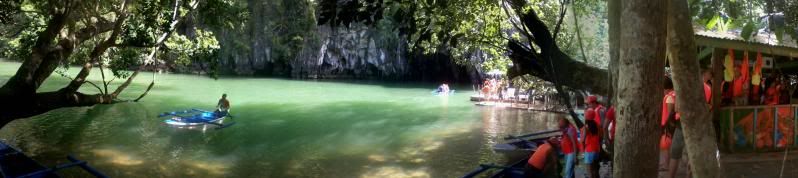
After the meeting, the participants had the chance to visit the Puerto Princesa Underground River, the world's longest navigable subterranean river and recently been announced as one of the New 7 Wonders of the Natural World.

Friday, July 15, 2011

Sustainability in Higher Education


Distinguished professor Dahe Jiang, Ph.D. from Tongji University in Shanghai, China visited Central Mindanao University last July 13, 2011. Dr. Jiang was here on a UNEP and UNESCO project to implement the Education for Sustainable Development (ESD) in Higher Education. This is a move to incorporate and fuse the concept of sustainable development in the higher education curriculum. Other academic institutions to be visited by Dr. Jiang will be UP Diliman and the Mapua Institute of Technology.

Dr. Jiang talked about the Education for Sustainable Development framework of the UN and how institutions in the country and in Asia can take part in the process of advocating the young minds about the concept of sustainable development.

In my own view, I think it is a great step in trying to advance the concept of sustainability into the limelight. However, may I add that it will also depend on how we will market sustainability in the classrooms. I hope that we can transcend from advocating environmentalism and sustainability as a cause-oriented endeavor to a profit-oriented one.

We just cannot market environmentalism these days like what we have done with “nationalism” and/or “patriotism”. It just won’t work in these times of practicality and pragmatism. Though we all know any type of unsustainable activity won’t be as practical in the long run as it seems.

However, when we start marketing sustainability as a product, we may start to slowly reap the fruits of sustainability in due time. Once people begin to realize that living sustainably can bring more savings and profit through the efficiency it provides (more work with less energy, materials, and waste), then they would start buying the concept like a product).

Businesses and institutions would then follow suit. This could start with policies and activities that adhere to the standards of sustainability and in so doing leads to savings and profit for such business. Hopefully, government will eventually follow.

How about you, do you think environmentalism and sustainability is still a cause-oriented concept or has it transformed into a profitable one?

Monday, December 20, 2010

5 reasons why I want to be an environmental scientist

I am a teacher but not the best, experience is.

Almost everybody have been asking me why i enrolled in such (at the very least) unique degree in college. Well, aside from its being new and unique during that time here are 5 of my most thought of reasons why I did not regret taking up environmental science in college.

1. Solutions to today’s problems need my scientific knowledge on the environment.

“Many environmental scientists protect the environment through jobs in solid and hazardous waste management, land use, and air or water quality. Their understanding of biology, chemistry, and physics helps them assess environmental quality and find ways to protect air, water, and land.”

Purdue University Environmental Science Recruitment Brochure

2. It’s definitely needed in the future.

“The number of jobs for environmental scientists is expected to grow much faster than the average for all occupations through 2018. As population grows, it takes more work to keep the environment clean. Also, more people are becoming aware of environmental problems and want to fix them. Businesses and governments will also hire scientists to make sure they are following stricter environmental laws.”

U.S. Bureau of Labor Statistics

3. The government needs my expertise.

“This science-supported, centralized approach to protecting the environment and the public health has yielded considerable gains. Although robust, long-term indicators of progress are unfortunately not available, there is little debate that, absent the current framework, environmental conditions … would be considerably worse than they are today."

New Roles for Science in Environmental Decision Making: Discussion Paper

4. More people are already aware but more still needs to be informed.

The world is changing faster now than at any time since the last ice-age 10,000 years ago and the major cause of that change is man. To allow the changes to continue unchecked is reckless at the least. Monitoring those changes and being able to convince others that we have to do or not do activities that affect the environment will take well qualified people with the relevant environmental science degree."

An Environmental Science Degree: An Investment In The Future

5. It’s a hero’s job.

Need I say more?

10 Jobs for Superheroes: Jobs That Make the World a Better Place

These are just some of the reasons why I am confident that I made the right choice in college. In the first place I did not think about these reasons myself. Somebody else thought about it and there are at least five of them.

Please leave comments below.

Friday, October 3, 2008

What is Environmental Science?


The present state of the environment poses a challenge to every sector of society:
• To the individual citizen this calls for a reexamination of how one relates to the environment.
• To the businessman this could mean a redirecting of one’s goals and objectives that would take into consideration the industry’s impact on the environment.
• To the government this could mean the promulgation and stricter implementation of environmental laws and regulations.
But the greatest challenge of all is directed to the educator, one whose shoulder rests on the acquisition and comprehension of knowledge about the environment and the imparting and nurturing of values and attitudes towards it (Santiago et. al. 1996).

Due to this challenge, a new subject was introduced in college campuses and in some high school courses. This was called environmental science. Eventually as the growing need for a more precise body of knowledge concerning the environment arises, environmental science became a baccalaureate degree.


Environmental science is an interdisciplinary area of study that includes both applied and theoretical aspects of human impact on the world. Since humans are generally organized into groups, environmental science must deal with politics, societal organization, economics, ethics and philosophy. Thus, environmental science is a mixture of traditional science, societal values, and political awareness. in short environmental science involves an understanding of scientific principles, economic influences and political action (Enger and Smith 2001).

Environmental scientists solve problems relating to power generation, waste reduction, recycling, land use, forestry, agriculture, economics, and a wide range of other areas. They study our relationship to nature and to each other, using the tools of science and mathematics, as well as principles from other disciplines, they develop solutions that prevent or reverse environmental deterioration and results in sustainability.

Environmental science is an action-oriented problem solving profession. In order to learn environmental science, you must do environmental science (Merril 2005).

See also:
5 Reasons why I want to be an environmental scientist

SOURCES:
1. Enger and Smith. 2001. Environmental Science: A Study of Interrelationship. (McGraw-Hill:Singapore).
2. Merril, D.P. (http://www.rit.edu/~932www/ugrad_bulletin/colleges/cos/envirosci.html) last updated: November 17, 2005
3. Santiago, et. al. 1996. Environmental Science: A Shared Responsibility Towards the Earth. (Rex Bookstore: Sampaloc, Manila)

Photo credits: AGTBruno

Monday, July 28, 2008

A tribute to "Frank"

Typhoon Frank ravaged the country last June. However, let us all remind ourselves of the pain it has brought to all our countrymen. Furthermore let us also not forget the lessons it has brought us. Let us not foget the real value of planning, preparedness, and the willingness to help in times of crisis.

The following is the lyrics of the song "Cycles" by Frank Sinatra which I think would be appropriate for the lessons we have learned from the tragedy.

CYCLES (Frank Sinatra)

(J. Caldwell)
[Recorded July 24, 1968, New York]

So I'm down and so I'm out
But so are many others
So I feel like tryin' to hide
My head 'neath these covers

Life is like the seasons
After winter comes the spring
So I'll keep this smile awhile
And see what tomorrow brings

I've been told and I believe
That life is meant for livin'
And even when my chips are low
There's still some left for givin'

I've been many places
Maybe not as far as you
So I think I'll stay awhile
And see if some dreams come true

There isn't much that I have learned
Through all my foolish years
Except that life keeps runnin' in cycles
First there's laughter, then those tears
But I'll keep my head up high
Although I'm kinda tired
My gal just up and left last week
Friday I got fired
You know it's almost funny
But things can't get worse than now
So I'll keep on tryin' to sing
But please, just don't ask me how

Thursday, June 19, 2008

LIFE’S ENDURING QUESTIONS: EXPLANATIONS ON OUR (NOT) THINKING ON DEVELOPMENT

Why are we not thinking?

Pride and prejudice could automatically make us evade this question and automatically dismiss it as N/A [a] because we might think that we are really thinking all the time. But sometimes we are in a mode of “suspended animation”[b] . There are periods in our so called development process that evidently shows that we are not thinking.

One of life’s realities is that we treat the obvious as practical and forget about the not obvious and dismiss it as not important. Whatever happened to the saying “the best things in life are free”. We have neglected the intangible things that make us human after all.

An ecological principle states that ”nature knows best”[c] but we sometimes are too proud to keep on thinking that we humans are in control. We have modified the natural processes of the environment in order to gain a meager amount of profit for our purses. If there would only be a High Court for the Natural Law, then we should have taken the capital punishment a long time ago.

What I mean here is that we really have neglected how nature has served us for free while we think only of the monetary value it has offered. We think only of the forest as timber, medicine or ornamental plants. We think only of how much we could earn if we cut a hectare of forest not how much we would lose without a hectare of forest. We think only of the obvious. How much is an air conditioning unit nowadays? Say PHP10,000.00, with at least a monthly electric bill of PHP500.00 we could actually be provided with cool fresh air in our homes for a month. However, a single tree in a forest could actually provide you with the same or even higher quality of pure fresh air the whole year round. But if we sell that tree as timber, how much does it cost in the market? Probably around 5,000 to 6,000 pesos. Now, is that a profitable deal?

Constanza et. al[d] provided us with a conservative estimate of US$16-54 trillion (10^12) per year, with an average of US$33 trillion per year worth of services that nature provides globally (air purification, fresh water provision, pollination, nutrient cycling etc.) And all of these are for free. Compare that with that year’s global gross national product of US$18 trillion per year, and you’ll realize that how much we could lose in trying to think of the obvious. I bet nature should start charging fees for its services.

We are not thinking during times of abundance

Reality sometimes really hurts. On a personal level, this happens regularly. This could maybe be attributed to the natural order of things, from order to disorder or from abundance to having less. It’s much harder to revolutionize it the other way around (disorder to order or from less to abundance). However, we could at least minimize the loss just by thinking.
A home with a monthly income of say PHP 15,000.00 per month should never have expenses that exceed that amount or else you’ll end up borrowing from next month’s budget. This is actually what’s happening to majority of families in the Philippines nowadays (you can count me in). The outcome is larger than the income.

On an ecological scale, nature has provided us with what we need for our lifetime, thus signifying the presence of abundance. Well, we were not thinking actually because little by little we now have less. God during the creation may have told us that these resources are ours to consume, but he never failed to mention that we should also sustain it[e].

Studies have shown that the resources we are using now are resources for next years consumption[f]. This fact evidently means that we are borrowing from the future. What will we be using next year? Ok, then no problem why don’t we use the resources for next next year and the year after that or how about for the next decade. The question is how would we be able to repay what we have borrowed from the future generation?

-------------------------------------
[a] Not Applicable. A common answer to filling forms if a question does not apply to the person concerned.
[b] n.1. temporary suspension of the vital functions (as in persons nearly drowned) (from Merriam-Webster Online Dictionary. http://www.merriam-webster.com/dictionary/suspended%20animation) rhetorically referring to a person temporarily unaware of the real world for a certain point in time.
[c] From “7 Environmental Principles” (PEMSEA Website). http://www.pemsea.org/easy-hub/young-environmentalists-10
[d] “The value of the world's ecosystem services and natural capital” (1997).
[e] …I am putting you in charge of the fishes, the birds, and all the wild animals (Genesis 1:29)
[f] “Raising our Environmental I.Q.” (Podcast from www.nyas.org/snc/podcasts.asp)

Wednesday, March 26, 2008

Planet in a (thermos) bottle: My view on climate change


We have heard so much about global warming lately: the news, the internet, T.V. etc. Sometimes it is just so common that we didn’t even have the chance and the motivation to dig deeper into the real situation because sometimes commonality leads to oblivion. Much like our political scandals which becomes nauseating in television everyday that it becomes the soap opera we have become accustomed to that we sometimes think that it is a part of a reality show where we the audiences are the one’s being played upon.

Global warming however is reality but it isn’t a show. My task is here is to make you understand about the issue in the simplest terms. I will try to describe global warming using a thermos bottle as an example because the universe is almost just like that, a thermos bottle. However, let us try to imagine that this type of thermos bottle perfectly stores heat inside just like what the universe behaves; no amount of heat comes in and no heat goes out. A thermos bottle is almost like that. Imagine further that every second the temperature inside that bottle rises up. In a plain thermos bottle, heat would have gradually escaped. The universe isn’t like that; there is no way heat could escape out of the universe. Eventually, additional heat just adds up thereby burning everything inside.

The universe is a thermos bottle and our planet is inside it. Everyday our lifestyle is attuned to producing heat. Every product that we consume creates a certain amount of heat from the time they are produced until they are consumed and this happens since the dawn of history.

Worse yet we have the greenhouse effect. This process worsens the situation because we have made our planet into another type of a thermos bottle. Greenhouses, in agriculture, is a type of a huge glass enclosure where plants are cared for during the winter months. It creates an artificial environment for the plants because it stores in heat even though it snows outside. Typically this is what the glasses are for, it easily lets in heat but it hinders it from escaping outside (well, what have we got here! another thermos bottle).Nowadays, pollution in our atmosphere is easily noticeable. We have hydrocarbons from motor vehicles, sulfur oxides and other noxious gases from factories and power plants. These gases are now enveloping our planet. Need I say that these gases are no different from glasses in a way that they easily let in heat but hinder it from escaping? So practically through time we have built our planet into a huge greenhouse and it doesn’t need a skillful carpenter to do that.

Cartoons Grabbed from: http://cagle.com/news/EnvironmentMadden/main.asp

 
Powered by Blogger