Showing posts with label education. Show all posts

Saturday, January 12, 2013

The Truths of Reading

Martha Maxwell of Dartmouth College Academic Skills Center exposes some myths of reading. Here’s what I’ve learned from it.

 You don’t have to read every word

Writers sometimes compromise sentence length in order to make grammatically and artistically favorable paragraphs. In so doing sentences become longer when in fact only 3-5 words in a sentence are the only ones that matters to give its meaning. So finding the right keywords in a paragraph can be enough to make you understand what the paragraph explains. The rest is just grammatical mumbo jumbo.

It’s not enough to read only once

My grad school professor used to tell us (his students), that his former professor of the same course we are currently attending, has read the required textbook ten times. And so his students (including my professor) must read the same textbook 20 times in order to be better prepared. Thus, we being the third generation students must read the same textbook 30 times to have the same effect.

Furthermore, textbooks aren’t like novels, or storybooks which can be easily understood within one sitting. Textbooks, scientific journals, or articles are meant to be painstakingly read many times in order to fully grasp the concept it intends to explain. So, don’t worry if you cannot understand a passage in your first try. It’s meant to be that way, so read again.

It’s OK to skip passages in reading

You may think that in order for you to understand a certain reading, you must read every word, sentence or paragraph. However, a technique called skimming and scanning can be handy in case you don’t have the time to comprehend lots of concepts.

Furthermore, some books are like a full meal, it has appetizers, a main course, and perhaps dessert. You won’t go hungry even if you skip either one of them (or two).

Sounding out words while reading slows you down

This is what’s being taught to us by our teachers in primary school; reading aloud. Eventually it caught us between the teeth. Now, even when we are reading silently, we still get the habit of saying it aloud in our minds, thus we still read as fast as we talk. That should not be the case; the brain is faster than our mouths, thus reading can be faster than talking. I bet when you are reading this paragraph, you are currently moving your lips (hehehe! Gotcha).

My advice: Next time your read, try humming inside your mind, eventually you’ll beat the habit of moving your lips while reading.

So what other things about reading do you know about? Share it with us here by typing your comment below.

Sunday, October 28, 2012

Three Vital Points in Choosing Your Thesis/Dissertation Topic

So, you are now in your final year in grad school. But before you finish your degree, comes the final rite of passage: your thesis or dissertation.

Have you come up with your desired topic then? Are you having trouble conceptualizing what direction your research will go into?

Some would give you a large list of suggestions on how to choose your research topic. However, it all boils down to three essential factors in your choice of topic. For me, it must be something you know, like, and can.

What You Know
It’s important that you choose a topic that you are very well versed on. This could be on a subject that you are very familiar with for several reasons (e.g. your line of work, your favorite subject, related to your hobby, etc.). Don’t dwell on a topic in which you still have to learn or read more or have limited reference.

You know what I’m talking about: Your knowledge on a certain topic gives you one leap of advantage in terms of time spent in formulating your research outline than having to learn something first before deciding what to write.

What You Like
It’s not enough that you know a great deal about a certain topic. What usually matters is your interest in it. The topic must be something that can grab your 100% commitment. Never choose a topic in which you have the slightest hint that you’ll get bored with it in a short while.

Remember this: If you do something you like and enjoy doing, you can’t stop until you finish it.
 
What You Can
The tendency for people who are too excited to start on something is that they overestimate. What I mean is that sometimes when we feel we know so much about one thing and at the same time extremely enjoy doing it, we seem to think of goals which are way over the roof and eventually impossible to realize. So, what I really meant is to think of a research project which you can implement within your capability.

Hint: Time, Money, and Effort are limiting factors for what type of research you are going to undertake.

I know these three points are not enough to make you finish your thesis or dissertation on time. But it’s a good way to start. Any way, you can share your own thoughts by adding other important points I might have forgotten.

Friday, November 25, 2011

Climate Change Adaptation through Education


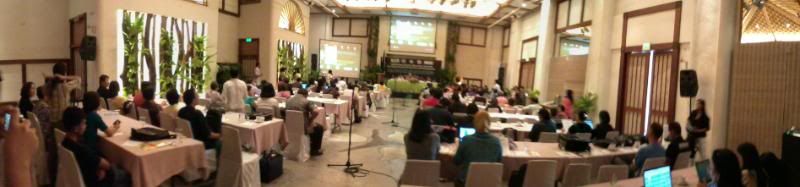
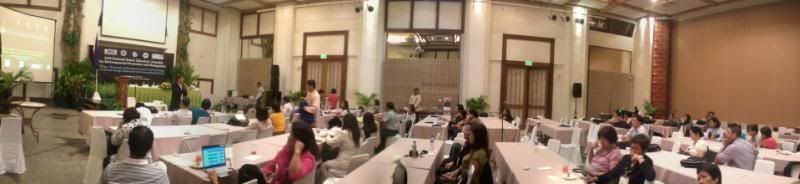
It’s another great time for educators and administrators as they got together and talk about climate change adaptation during the 16th National Senior Educators Assembly in Environmental Protection and Management. The event was held on November 24 – 25, 2011 at the Legend Hotel, Puerto Princesa City, Palawan. This was organized by the Philippine Association of Tertiary Level Educational Institutions in Environmental Protection and Management (PATLEPAM) in cooperation with the EMB-DENR and Palawan State University.
The Meeting showcased the reports of selected universities nationwide on their climate change adaptation experiences. The reports focused on the following areas: coastal and marine, health, agriculture, and forestry. These were presented respectively by Prof. Rowena Zoilo (NSTP Director, Bicol University), Dr. Roger Guzman (Executive Director, Philippine Federation for Environmental Concerns), Dr. Helen Sigua, MD (Professor, Ateneo School of Medicine and Public Health), Dr. Leonora Ngilangil (Professor, Don Mariano Marcos Memorial State University), Dr. Helen Pondevida (Research Director, University of Southeastern Philippines), Dr. Santiago Utzurrum, Jr. (Professor, Silliman University), and Dr. Olga Nuneza (Vice Chancellor for Research and Extension, Mindanao State University – Iligan Institute of Technology)
Guest speakers who opened the ceremony were the following: Dr. Teoticia Taguibao (OIC-President, Palawan State University), Dr. Ruth Guzman (VP for Research, Extension, and Information Services, Rizal Technological University and Chair, PATLEPAM Board of Directors), Ms. Gay Maureen Alagcan (Outcome Manager, MDGF 1656 Programme Management Unit, National Economic Development Authority), Mr. Reynaldo Pallaya (OIC-Provincial Environmental Management Officer, Environmental Management Bureau-DENR), and Vice Mayor Lucilo Byron of Puerto Princesa City.

Other topics presented in the meeting are the following:

Assessment on the Extent of Knowledge of Educators on Climate Change Adaptation (Ms. Sofia Alaira, UPLB-SESAM)

Assessment of the Extent of Knowledge of Administrators on Climate Change Adaptation (Dr. Ruth Guzman, RTU)

Assesment on the Extent of Climate Change (CC) Integration in Selected Higher Education Curricula, and the Enhanced Syllabi with CC Concerns (Dr. Cely Binoya, CBSU)

Resource Inventory on Climate Change Adaptation (Dr. Ninfa Pelea, BU)

Following the presentations is the open forum and the PATLEPAM Business Meeting.
The Meeting culminated with the body's approval of PATLEPAM General Assembly Resolution No. 1 series of 2011 otherwise known as “Mainstreaming Climate Change Adaptation (CCA) and Disaster Reduction and Risk Management (DRRM) in the Curricular Programs of Higher Education Institutions (HEI’s). The resolution asks the Commission on Higher Education (CHED) to issue a memorandum (CMO) obliging higher education institutions (HEI’s) in the country to integrate CCA and DRRM in the school curriculum.

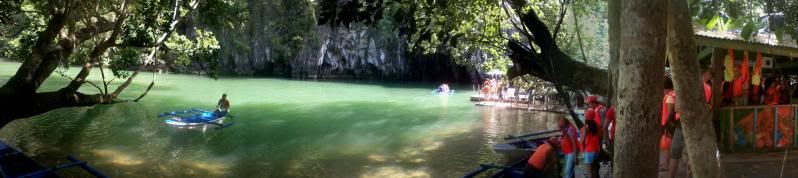
After the meeting, the participants had the chance to visit the Puerto Princesa Underground River, the world's longest navigable subterranean river and recently been announced as one of the New 7 Wonders of the Natural World.

Tuesday, November 15, 2011

Document Management for Students (and Non-Students): a crash course

Messy desks, overflowing drawers, loaded cabinets…
These are prerequisites to a disaster.
…a disaster that might take up most of your time and in fact a risk to your job.
Lost files, untraceable documents, unorganized references…
You need to create a system of organizing this messy environment and lead a life of efficiency and being effective at home, school or work.
Noticeable results will surely come your way if you follow these three easy steps:

SORT
Run through all your documents one by one and put the related ones in a pile. Example: you can put together lecture notes, handouts, clippings from a course you took up the previous semester in a pile while another pile is for financial records (receipts, bills, bank slips, etc.). It doesn’t matter how many piles you put up as long as the documents in there are somewhat related. You can then run through each pile and create piles or subcategories for each.

 SEND
If there are documents or files you think you don’t need any more, there are two ways you can do about it. First, if you think other people might need it (friends, officemates, classmates) then you can send it to them. Second, if you think others won’t have a use for it as much as you do then send it to the garbage bin.

STORE

Prepare supplies for storing your files and documents. Folders can be good for documents with few pages. Boxes can be used to store thick documents or a group of folders. Folders or boxes, it doesn’t matter, what’s important is proper labeling of the documents, alphabetization, or numbering for easy retrieval.
There you go, an easy way to organize your cluttered documents in three easy steps.
If there’s something I have left out it’s because I want you to provide it here. You can use the comment link below.

Saturday, November 5, 2011

On blogging and teaching at the same time


When I stopped teaching a year ago, I started to blog frequently. Let’s face it, at that time, I’ve got more time to write posts, learn more html stuff, and do research on several topics for my posts.

I couldn’t have the same amount of free time when I was teaching. I mean, you write lessons, you make exams, check papers, advice students, how in the world will you find the time to write even a single 200-page blog post given such hectic schedule?

I admit I got hooked with blogging after I quit teaching. The excitement I feel as pageviews increases everyday, the lively comments from readers, not to mention the fulfillment from seeing your work published (and being read) online: these are some of the reasons why I was preoccupied with blogging.

Now, I might say teaching is really a calling. Somehow, the academe finds me back even if I tried to run away from it. I’m back to teaching again.

But this time, I don’t intend to place blogging in the sidelines. I’m not yet sure how to go through this, but I plan to combine teaching and blogging. Not in a separate way but in a more complementary fashion.

I’m thinking about teaching using a blog or blogging about teaching. I still don’t know. It will be a work in progress. I think it’s worth a try.

How about you, in what way do you think can we combine blogging and teaching in a complementary fashion? Share it with us.

Friday, July 15, 2011

Sustainability in Higher Education


Distinguished professor Dahe Jiang, Ph.D. from Tongji University in Shanghai, China visited Central Mindanao University last July 13, 2011. Dr. Jiang was here on a UNEP and UNESCO project to implement the Education for Sustainable Development (ESD) in Higher Education. This is a move to incorporate and fuse the concept of sustainable development in the higher education curriculum. Other academic institutions to be visited by Dr. Jiang will be UP Diliman and the Mapua Institute of Technology.

Dr. Jiang talked about the Education for Sustainable Development framework of the UN and how institutions in the country and in Asia can take part in the process of advocating the young minds about the concept of sustainable development.

In my own view, I think it is a great step in trying to advance the concept of sustainability into the limelight. However, may I add that it will also depend on how we will market sustainability in the classrooms. I hope that we can transcend from advocating environmentalism and sustainability as a cause-oriented endeavor to a profit-oriented one.

We just cannot market environmentalism these days like what we have done with “nationalism” and/or “patriotism”. It just won’t work in these times of practicality and pragmatism. Though we all know any type of unsustainable activity won’t be as practical in the long run as it seems.

However, when we start marketing sustainability as a product, we may start to slowly reap the fruits of sustainability in due time. Once people begin to realize that living sustainably can bring more savings and profit through the efficiency it provides (more work with less energy, materials, and waste), then they would start buying the concept like a product).

Businesses and institutions would then follow suit. This could start with policies and activities that adhere to the standards of sustainability and in so doing leads to savings and profit for such business. Hopefully, government will eventually follow.

How about you, do you think environmentalism and sustainability is still a cause-oriented concept or has it transformed into a profitable one?

Tuesday, April 12, 2011

Top 10 funny graduation photos

Graduation day is such a memorable event in our lives. Photos and videos are priceless souvenirs to reminisce those wonderful days in school. Unfortunately some souvenirs may also gather some laughs. Here are examples of funny graduation photos:

1. An Indian Ceremony or a College Prank?

A graduation class pictorial obviously becomes a wet photo as pranksters throw pails of water into the graduates as the camera clicks. (Source: damnfunnypictures.com)

2. A Dual Party for a Student Mom

Kudos to successful working moms, single parents, and student moms. Super multi taskers. (Source: www.collegehumor.com)

3. Don’t they have an English major in the Graduation Committee?

Though we don’t need an English major to notice such errors. Even MS Word can do that (Source: www.collegehumor.com)

4. A Witty(?) Yearbook Quote

Yearbook quotes are mirrors to a student’s intelligence (hope so). It is preserved in the pages for others to admire, comment or make fun about. (www.zoopatrol.com)

5. An Unknown Girl in the Varsity Team (Yearbook Picture)

Maybe, its just here real name. I wonder what his father’s name is. (Source: failblog.org)

6. Lack of Planning?

Anyway, it’s the thought that counts. (Source: www.funnypictures.net.au)

7. Ever Wonder what Female Graduates Wear under their Gowns?

Now I know why male deans sitting on stage are frozen on their seats. (Source: funnyforwards.net)

8. Can you pick her out from among the Graduates?

There will always be at least one. (Source: thechive.com)

9. A Typical Graduation in Somalia

Graduates of military science and guerrilla tactics? I wonder if they need security guards at the ceremony. “Give me my diploma or else!” (Source: killsometime.com)

10. He thought it was Funny

But the school administrators don’t think so. The man wearing a sexually offensive costume during a graduation ceremony was later arrested for disorderly conduct. He was asked by the court to publish a letter of apology in the local newspaper, pay court charges, and do 24 hours of community work. (Source: nicedeb.wordpress.com)

Are there any funny graduation photos you can share with us? Send us the link by using the comment link below.

Saturday, March 19, 2011

Grad School Survival Guide: another free eBook by Mike Arieh Medina

I wish I have bought a book or two about grad school 7 years ago when I took up my master’s degree. I just wasn’t able to find one at least locally.

I wish somebody would have shared with me what to expect from grad school. My academic life would have been a bit bearable because I would have prepared for some unexpected twists in my academic life.

Maybe it was meant to be.

Having survived the jungle, here’s a guide for everyone who has taken the same step as me (advancing their academic career).

However, if you’re still contemplating on whether to get in or not into grad school, this eBook is also for you (in fact this is really for you).

However, if you’re not into the “grad school thing” you can still download it and share it to anyone you think would benefit from it.

Reading this book however will not guarantee higher grades in grad school. It cannot even guarantee that you obtain that degree just from reading it and following everything written on it. All it could guarantee is that somebody has done what’s written on it and survived grad school (that’s me).

And oops! Did I mention that it’s free? O yes! I just did. So what’s stopping you? I’m sorry, here’s the link:

Grad School Survival Guide: The Incomplete Handbook for Surviving the Rough Academic Terrain

Kind of a long title for a short book isn’t it? Any way here’s another catch: you don’t really have to download it because all the chapters are built up upon articles on this blog. So if you have the time to explore the archives on this blog please do so. However, if you wish to have a good reading experience offline I suggest you download this eBook.

Here’s the link again.

gradschoolsurvivalguide.pdf

And if you ever have opinions after reading it (I’m sure you do) or any suggestions to improve it (I’m planning a 2nd edition), then please do use the comment link below. I would sure love to hear from you.

Saturday, March 12, 2011

Cityville on Facebook: an academic point of view

You may have heard of Cityville, the newest game craze on Facebook. Right now, you might already be hooked on the game. Yup Cityville, and you know what? I hated it. You know why? It’s because my wife is totally hooked on it. Right now while I’m writing this post, her eyes are glued on it. Then come to think of it, she’ll have something to think about while I’m also glued on my monitor writing this post.

But wait I’m giving it a second thought. Just from observing the intricacies of the game while she plays it, I come to realize its academic value. Academic in the sense that it made use of certain concepts and models I have encountered in school when you play it. I think playing the game can be a good exercise for the (academic) mind. Here’s a short list of these concepts and models which are applied in the game:

Models of Urban Structure

The Concentric Ring Model
I have encountered this when I took up Environmental Planning. There are three models that can be used in the game in terms of the placement and arrangement of your building and structure in your city. You can use the Concentric Ring Model if you wish for simplicity in building your city. This means you start with a central business district in the city center and surround it with industrial, residential, and agricultural lands in an outward fashion (anyway the game allows you to move structures even if you have already built it, so this is doable in the game as opposed to a real city).

A more complex yet interesting model is the Sector Model. This is a city developed along major transportation structures (railroads, roads, ports, etc.). The model is based upon the idea that settlements grow from a need for greater access thus commercial areas are established along main roads and industries along railroads. Residential areas are then categorized into low income (those near industries and businesses), middle income (farther away from industries) and high income (farthest from the industries).

The Multiple Nuclei Model, although starts with a central business district, eventually  produces multiple centers as necessary structures spring around major businesses (e.g. hotels and restaurants built around airports or apartments and cafeterias established around schools). This may happen in the game as you city expands into a more complex arrangement of buildings, houses, and other structures.

Factors of Production

As a basic economic concept, production is possible through the right combination of the following factors: land, labor, capital, and entrepreneurship. In Cityville, your performance on the game is based on how you make decisions in using and acquiring these factors: land (expansion), labor (energy), capital (buildings, structures, etc.), and entrepreneurship (this refers to your skills and strategies as a player).

The Law on Comparative Advantage

This is a concept in political economics referring to an economy’s advantage in the production of goods in response to the advantage of another economy. If you have the ability to produce more of a specific product which is needed by another country which has a limited production of it and that country also has the ability to produce a certain product which you need but you cannot produce much for your own consumption, then why not trade. You sell your surplus goods to them and buy goods you need from them. In Cityville, the train facilitates the use of comparative advantage. If you lack the goods to supply your business then buy goods using the train. On the other hand, if you lack the money to build your businesses, then sell your goods using the train. Export/Import! That’s what I’m talking about.

Ecological Services

My inclination in the field of economics is on balancing it with the environment. So I can’t help but notice this concept. Ecological services refer to the services given by nature (organisms and ecosystems) which has given us a load of benefits through its processes (water purification, provision of clean air, pollination, or aesthetic and recreational benefits). The value of these services is a factor of production (e.g. we need to breathe clean air and drink clean water in order to do our job well, right?). Furthermore, these services cannot be replicated even by the most modern technology. Thus, it should have a certain value in the market and in Cityville it does have. The shady tree decoration adds a 1% value to your earnings if you plant it near a business or a residence. This means more trees more earnings. I just regret that a tree only adds 1% value to an economic good, it should be more. Any way, I hope this transcends into reality, so plant more trees around your homes to add value to it.

Social Capital

Social Capital is a sociological concept referring to social networks (friends, relatives, associations, etc.) as a factor of production in the same way as a computer or your master’s degree contributes to productivity (e.g. if you’re a single parent, you might not be able to work without a relative whom you trust to take care of your child while your in the office). In Cityville, you won’t be able to harvest all the crops in your farm or collect your earnings from businesses without the help of your neighbors (friends) you need lots of energy for that. Sometimes you need to hire your friends in your community buildings (city hall, post office, police station) so that you can attract more citizens. Furthermore, you need your neighbors’ gifts so that you can effectively build your city. After all Cityville (and Facebook) is a community, we need each other every now and then.

There you go. Games should not just be recreational, it should also be educational. There are more concepts in my list but this post is getting longer. I don’t want to bore you so I’ll end this post by breaking the following news:

My wife told me that she needs my help in building her city. She asked me to be her neighbor so I could give her gifts that she could use. She said, I can also help by visiting her city and help her with harvesting her crops and collecting fees. Being a good husband I submitted to her will.

Saturday, January 22, 2011

4 sites where you can download eBooks for free

In one of my previous posts about computers (Computer: a grad student’s best friend) I have emphasized the importance of the internet in the life of a student. One of this is the countless opportunity to download and share eBooks.

The arrival of the internet into our lives is what every grad student should celebrate. eBooks, PDF files, and web pages of every topic we can ever imagine can be surfed, browsed, and searched in the World Wide Web with just a few strokes and few clicks.

You can just imagine yourself carrying all your books around in your laptop or in a CD or a USB drive and read them anywhere and anytime. This is definitely convenient as opposed  to leaving all your books at home and just bringing what you can carry to school (that’s just maybe 1 to 3 books total).

Here are my suggested websites where you can easily search and download thousands of eBooks on a variety of topics.
As the site says:

On BookBooN.com you can download free ebooks for students and travelers in PDF format. All the books can be downloaded without registration. Our ebooks are legal and written exclusively for Bookboon. They are financed by a few in-book ads.
This is a whole lot of resources for students on any academic subject from business, science, economics, mathematics, etc.
Website description

Free Book Spot is a free e-books links library where you can find and download free books in almost any category. Do you like ebooks? This is place for you!  We have lots of links to free ebooks in more than 90 categories.  You can find scientific, engineering, programming, fiction and many other books. All books are ready for download without registering.
Superb collection and a whole lot of categories you can search from.

This is the new site of Gigapedia.com a large resource of university textbooks in a wide array of academic and non-academic subjects.

Gigapedia has a huge repository of nearly half a million Ebooks relating to various categories both educational and non educational. The site is used by hundreds and thousands of users daily and plenty of new titles get uploaded each day. As you may have guessed, it’s not only free stuff that you can find on Gigapedia – thousands of premium, paid books are shared on the site, with actual files being hosted externally on one click hosting services. While Gigapedia has remained unchanged for the most part during the last couple of years, it seems to be undergoing several major changes right now. GP seems to be moving to a new domain and is now accessible by the URL http://library.nu. As some of you may have noted, Gigapedia was closed for public registrations in the last couple of months. If you were looking forward to open registrations, there’s even better news - All downloads on site are now open to the public and accessible by even unregistered users. 
I found textbooks here with more than a thousand pages. Some eBooks are about 50-100 MB (though not all of them, some are less than 10 MB). Many of the books here are medical books (no wonder they’ve got a thousand pages).


Site description:

The copyright of many well-known books has expired and they now fall into the public domain. The books in the OPEN LITERATURE section of this website were obtained from Project Gutenberg, which is a massive volunteer-driven effort to capture public domain books into an electronic format. Project Gutenberg attempts to store the captured books in as timeless a format as possible, by using only straight text and in limited cases html. The goal of this website was to make many of these books available in the easy-to-read and easy-to-print PDF format. The books are available for download free-of-charge and without requiring user registration.
Free and without registration, what more can you ask for.

There are hundreds of other websites offering free eBooks. This list however are the ones I have been visiting to download materials and resources for study and writing purposes. I have my own library in my hard disk and in a DVD.  And I have them with me every time I travel.

Do you know of any other sites with free eBooks. Please share it here. Use the comment link below.

Sunday, January 16, 2011

How can colleges and universities help society?

Last Thursday, an article by Lawrence S. Bacow, Shamsh Kassim-Lakha, and Saran Kaur Gill came out on the Chronicle of Higher Education website. They gave an insight on how the academe can benefit society and at the same time improve their teaching capacity.

They started by questioning some long held ideas employed by universities regarding their role in social development.

“…we believe that a university is not an ivory tower. It is a social enterprise, with obligations to the society that supports it.
Scholarship need not be carried out in splendid isolation. Universities themselves will benefit if they work on crucial issues affecting their local communities, such as public health and education, challenges of urban or rural living, climate change and agricultural production, and the development of civil society.”
Following are three ways the academe can share their material and intellectual resources in order to contribute to social development:

1.)    Working on local problems can enhance teaching and transform lives.

The article cited the Urban Health Program at Aga Khan University focusing on the poverty stricken city of Karachi in Pakistan which involved improvement of basic health care, sanitation, education, and employment opportunities in the area.
“[The Program] required medical students to conduct their practicum and research activities in poor neighborhoods, where they also offered counseling, health and nutrition education, health screening, and child and maternal aid. The university significantly improved what its students learned, made it more relevant and assisted poor families in Karachi.”
2.)    A university can act locally but have national influence.

Shape Up Somerville is a program by Tufts University when they have found out from a university research that half of the first- through third-grade students in Somerville, Mass., near the university campus, were overweight or at high risk for obesity.

“They used strategies designed to increase options for physical activity throughout the day and to improve dietary choices. The rate of weight gain dropped among Somerville children in the targeted age group.

By directing scientific research, policy development, and volunteer service at a specific local issue, Shape Up Somerville can be a national model to reduce childhood obesity. In 2010, at the invitation of Michelle Obama, the mayor of Somerville spoke at the White House to outline why the program has been so successful.”
3.)    Universities need partners.

The article cited the National University of Malaysia's partnership with the Sime Darby Foundation, a company created by a major palm-oil industry player, to establish a chair for climate change. The said chair aims to develop scientific knowledge of tropical climate systems to find ways on how nations and communities can mitigate future problems. This will be an avenue  which will generate essential knowledge and develop a program that will enable teachers to train their students to teach locals about climate change.

"The support for local protection-and-mitigation plans is a key motivating factor for both the university and the foundation.
Such partnerships facilitate a two-way flow of expertise and resources that benefits everyone involved, and enriches education, research, and service.”
In Philippine colleges and universities, we are already doing it through our National Service Training Program (NSTP) and other programs and partnerships initiated. This can be manifested by several communities adopted by the schools. This is where the students conduct outreach program, medical missions, trainings, and other activities that help the community and at the same time teach students about their roles in social development.

Let us all hope that this will be sustained for a long time by the academic sector and not just for the sake of accreditation. Indeed we have come to be awakened by the fact that the academe is a part and parcel of society and has an essential role in improving it. The concept of the academe being  “untouchables” hovering over society only to criticize it and make observations and recommendations without offering a helping hand is now kept in the old school archives where it belongs..

Do you have any comments? Click the link below this post.

Thursday, January 13, 2011

Top 10 interesting quotes from UP professors

The University of the Philippines is the country’s prime mover of academic freedom. It’s where the creams of the crop go as majority would say. I never got the chance to be in UP, and I wonder what it feels like to be there. I may never know, but here are excerpts on what UP students have recorded of their professors’ wit and humor during classes. This may provide us with an idea of what a UP classroom feels like (in case you haven't been there).

My late friend Ray, who took his PhD in UP Los BaƱos, used to email me a collection of what UP students call ”quotable quotes” from their professors. It doesn’t say where the email originally came from (it was forwarded many times) and I don’t have any means of verification. However just for the fun of it, here are 10 of my favorites from the list. I have enclosed some English translation in brackets [ ] for the sake of our non-Filipino readers.

"Class, next week na lang ung result sa exam nyo [Class, I’ll give the results of your exam next week]. I am having a hard time checking it. I will seek first the divine guidance on what to do about it. Class, don’t worry about your grade. Let me worry about it."
- Sir de Jesus, Envi Sci 1

MA'AM: Many people believe that we, psychology graduates can read minds...
(Silence…). Actually, we can.
CLASS: Weh! Sample.
MA'AM: Right now, you think that I'm bluffin’
- Ma'am Chei Billedo, Psych

"I don't give surprise long exams. All exams are announced. Halimbawa, Class, mageexam tayo, NGAYON NA!" [Example. Class, we’ll have an exam, RIGHT NOW!]
- Ma'am Chei

"Oo, nagpapaulan ako ng uno... baket? aanhin ko ba yun? di naman ako yayaman dun." [Yes, I give perfect grades…why? What will I do with that? I won’t get rich from it]
- Sir Atoy Navarro, Histo I

"Last sem was the first time that I gave a grade of 5, and it felt good!!!"
-Prof Goldie, Comm II, circa 1998, first day of class

Atheist ako, pero pag nasa bahay, nagro rosary kami ng Nanay ko, eh kung magalit sa kin yun. [I’m an atheist, but when I’m at home I pray the Rosary with my Mom, what if she’ll get angry]
- Socio 11 Prof

"Kaya nga ideal eh, hindi siya nangyayari sa totoong buhay [That’s why it’s ideal, it doesn’t happen in real life]. Pero an approximation is good enough"
- Sir Engle, on ideal and real systems

Terror prof after an exam (last day na din ng class..): ok class.. see you next sem!

CLASSMATE: Ma'am, pwede po bang next week na kami mag report? [Ma’am can we do our report next week instead?]
MA'AM: Alam mo [You know], God is good. And I am God. So yes, pwede next week.

Ma'am Vitriolo (2nd to the last meeting)
Okay class, next week, we start the lecture proper.


----
How about you? Does something like any of these ever happens in your classroom?

Monday, December 20, 2010

5 reasons why I want to be an environmental scientist

I am a teacher but not the best, experience is.

Almost everybody have been asking me why i enrolled in such (at the very least) unique degree in college. Well, aside from its being new and unique during that time here are 5 of my most thought of reasons why I did not regret taking up environmental science in college.

1. Solutions to today’s problems need my scientific knowledge on the environment.

“Many environmental scientists protect the environment through jobs in solid and hazardous waste management, land use, and air or water quality. Their understanding of biology, chemistry, and physics helps them assess environmental quality and find ways to protect air, water, and land.”

Purdue University Environmental Science Recruitment Brochure

2. It’s definitely needed in the future.

“The number of jobs for environmental scientists is expected to grow much faster than the average for all occupations through 2018. As population grows, it takes more work to keep the environment clean. Also, more people are becoming aware of environmental problems and want to fix them. Businesses and governments will also hire scientists to make sure they are following stricter environmental laws.”

U.S. Bureau of Labor Statistics

3. The government needs my expertise.

“This science-supported, centralized approach to protecting the environment and the public health has yielded considerable gains. Although robust, long-term indicators of progress are unfortunately not available, there is little debate that, absent the current framework, environmental conditions … would be considerably worse than they are today."

New Roles for Science in Environmental Decision Making: Discussion Paper

4. More people are already aware but more still needs to be informed.

The world is changing faster now than at any time since the last ice-age 10,000 years ago and the major cause of that change is man. To allow the changes to continue unchecked is reckless at the least. Monitoring those changes and being able to convince others that we have to do or not do activities that affect the environment will take well qualified people with the relevant environmental science degree."

An Environmental Science Degree: An Investment In The Future

5. It’s a hero’s job.

Need I say more?

10 Jobs for Superheroes: Jobs That Make the World a Better Place

These are just some of the reasons why I am confident that I made the right choice in college. In the first place I did not think about these reasons myself. Somebody else thought about it and there are at least five of them.

Please leave comments below.

Monday, July 28, 2008

A Letter to JEM


Dear JEM[1],

Welcome once again to another school year at PCT. I wish to welcome you regarding your membership with the Junior Ecologist Movement or the JEM. I personally would like to thank you for giving JEM a chance to mold you towards physical, social, mental, and hopefully spiritual development. Honestly, as moderator, I feel it would be such a tiresome and problematic task for me, but I have to take it as a challenge because I think it would also be a developmental process on my part as a moderator, as a teacher, and as a person.

First and foremost, I would like to tell you that JEM isn’t just a club or organization in fact, as its name suggests, it is a movement, and we all know a movement basically needs directions in order for it to be efficient and purpose driven. When I say directions I am referring to our guiding principles and ideals. I hope we all would be able to uphold all of it not only by reading our publications, our documents, our by-laws etc., but also putting it in our hearts and practice it in our daily lives. In the future, we definitely would need all these values in order to go through the different challenges in our lives.

Secondly, a movement needs energy, and the energy of the Junior Ecologist Movement depends on how active you are in every activity that we have. I am not only referring this to leaders. Being an active member is the real form of leadership because in doing so you inspire others and pave the way for others to get involved too.

Last but not the least; a movement should have a purpose. There are actually two types of purpose here at JEM. First is our common purpose and this could be better explained by the documents that legitimized our existence here at PCT. These are the reasons why we have different activities in order to achieve those purposes. However, I am challenging you to put more if not an equal weight to our individual purposes. This does not refer to our personal and self-promoting reasons. What I am referring to is man’s endless search for reason and belongingness. I am hoping so much that JEM answers your questions of existence in this seemingly problematic planet. Everyone tries to identify themselves with something and someone. As moderator, I hope that JEM would be an instrument for everyone to find their mission in life.

Finally, much as I would like everyone to take JEM seriously, let’s not forget that your are here at PCT for a more serious matter, and that is your studies. Always remember that JEM is here to add fun and meaning to your college life but college life would be more fun and meaningful if you finish it.

Have a wonderful school year at PCT with JEM!

Truly yours,

MICHAEL ARIEH P. MEDINA
Moderator, Junior Ecologist Movement

[1] Junior Ecologist Movement (JEM), is a collegiate, non-class, environmental organization at the Philippine College of Technology in which the author is a moderator.

Watch the JEM Video Here

 
Powered by Blogger