

Showing posts with label graduate school. Show all posts

Wednesday, November 25, 2015

The great dissertation hoaxes

“Originality is undetected plagiarism.” - William Ralph Inge, (1860-1954), English author, Anglican priest, and professor of divinity at Cambridge.
Around two weeks ago, Apple Daily, a Hong Kong print newspaper reported an alleged plagiarism committed by a top university official in Lingnan University. In 2013, Herdip Singh, associate vice president and comptroller of Lingnan University submitted his doctoral dissertation at the Tarlac University, Philippines.
Singh

Singh’s dissertation entitled “Corporate Governance in the China Region: Implication to Business Management” was found to be substantially similar to a master’s thesis submitted by Wu Chunshui, a Chinese student at Lund University, Sweden in 2010.
Using Lund University’s plagiarism detection software, it was revealed that the two manuscripts were 96% similar.

Currently, Singh refused to comment on the issue.

This however is not the first time such issue came about in academia. Here are examples of popular people from the past who were alleged (and proven) to commit plagiarism with regards to their dissertations.

German Defense Minister Karl-Theodor zu Guttenberg
Guttenberg

In 2011, Guttenberg’s doctorate degree from the University of Bayreuth was stripped of him after he admitted copying several sources for his thesis in 2006 without citing them. This issue earned him the moniker as the minister for cut-and-paste, and Baron zu Googleberg. As a consequence, Guttenberg resigned as minister thereby ending his promising political career.

Russian President Vladimir Putin
Putin

Putin claimed to hold a doctorate degree in economic science at the St. Petersburg Mining Institute in 1996. However, it was reported that Putin never really attended the institute. Later, researchers were able to get a copy of his dissertation. After inspection, Putin’s hardly accessible manuscript turned out to be littered with plagiarized content all throughout.

Civil Rights Activist Martin Luther King Jr.
King

In the later part of 1980’s, King's doctoral dissertation at Boston University entitled “A Comparison of the Conception of God in the Thinking of Paul Tillich and Henry Nelson Wieman” contained exact texts from another dissertation in the same university three years earlier. Further investigation also revealed that his other academic papers as well as his speeches were also plagiarized.
Despite this, Boston University did not revoke his doctorate degree further saying that in fact King’s dissertation made an intelligent contribution to scholarship.

How about you, do you know of anyone who were suspected or found out to have plagiarized their PhD dissertation? You can add to this list by using the comment link below.

Saturday, January 12, 2013

The Truths of Reading

Martha Maxwell of Dartmouth College Academic Skills Center exposes some myths of reading. Here’s what I’ve learned from it.

 You don’t have to read every word

Writers sometimes compromise sentence length in order to make grammatically and artistically favorable paragraphs. In so doing sentences become longer when in fact only 3-5 words in a sentence are the only ones that matters to give its meaning. So finding the right keywords in a paragraph can be enough to make you understand what the paragraph explains. The rest is just grammatical mumbo jumbo.

It’s not enough to read only once

My grad school professor used to tell us (his students), that his former professor of the same course we are currently attending, has read the required textbook ten times. And so his students (including my professor) must read the same textbook 20 times in order to be better prepared. Thus, we being the third generation students must read the same textbook 30 times to have the same effect.

Furthermore, textbooks aren’t like novels, or storybooks which can be easily understood within one sitting. Textbooks, scientific journals, or articles are meant to be painstakingly read many times in order to fully grasp the concept it intends to explain. So, don’t worry if you cannot understand a passage in your first try. It’s meant to be that way, so read again.

It’s OK to skip passages in reading

You may think that in order for you to understand a certain reading, you must read every word, sentence or paragraph. However, a technique called skimming and scanning can be handy in case you don’t have the time to comprehend lots of concepts.

Furthermore, some books are like a full meal, it has appetizers, a main course, and perhaps dessert. You won’t go hungry even if you skip either one of them (or two).

Sounding out words while reading slows you down

This is what’s being taught to us by our teachers in primary school; reading aloud. Eventually it caught us between the teeth. Now, even when we are reading silently, we still get the habit of saying it aloud in our minds, thus we still read as fast as we talk. That should not be the case; the brain is faster than our mouths, thus reading can be faster than talking. I bet when you are reading this paragraph, you are currently moving your lips (hehehe! Gotcha).

My advice: Next time your read, try humming inside your mind, eventually you’ll beat the habit of moving your lips while reading.

So what other things about reading do you know about? Share it with us here by typing your comment below.

Sunday, October 28, 2012

Three Vital Points in Choosing Your Thesis/Dissertation Topic

So, you are now in your final year in grad school. But before you finish your degree, comes the final rite of passage: your thesis or dissertation.

Have you come up with your desired topic then? Are you having trouble conceptualizing what direction your research will go into?

Some would give you a large list of suggestions on how to choose your research topic. However, it all boils down to three essential factors in your choice of topic. For me, it must be something you know, like, and can.

What You Know
It’s important that you choose a topic that you are very well versed on. This could be on a subject that you are very familiar with for several reasons (e.g. your line of work, your favorite subject, related to your hobby, etc.). Don’t dwell on a topic in which you still have to learn or read more or have limited reference.

You know what I’m talking about: Your knowledge on a certain topic gives you one leap of advantage in terms of time spent in formulating your research outline than having to learn something first before deciding what to write.

What You Like
It’s not enough that you know a great deal about a certain topic. What usually matters is your interest in it. The topic must be something that can grab your 100% commitment. Never choose a topic in which you have the slightest hint that you’ll get bored with it in a short while.

Remember this: If you do something you like and enjoy doing, you can’t stop until you finish it.
 
What You Can
The tendency for people who are too excited to start on something is that they overestimate. What I mean is that sometimes when we feel we know so much about one thing and at the same time extremely enjoy doing it, we seem to think of goals which are way over the roof and eventually impossible to realize. So, what I really meant is to think of a research project which you can implement within your capability.

Hint: Time, Money, and Effort are limiting factors for what type of research you are going to undertake.

I know these three points are not enough to make you finish your thesis or dissertation on time. But it’s a good way to start. Any way, you can share your own thoughts by adding other important points I might have forgotten.

Tuesday, November 15, 2011

Document Management for Students (and Non-Students): a crash course

Messy desks, overflowing drawers, loaded cabinets…
These are prerequisites to a disaster.
…a disaster that might take up most of your time and in fact a risk to your job.
Lost files, untraceable documents, unorganized references…
You need to create a system of organizing this messy environment and lead a life of efficiency and being effective at home, school or work.
Noticeable results will surely come your way if you follow these three easy steps:

SORT
Run through all your documents one by one and put the related ones in a pile. Example: you can put together lecture notes, handouts, clippings from a course you took up the previous semester in a pile while another pile is for financial records (receipts, bills, bank slips, etc.). It doesn’t matter how many piles you put up as long as the documents in there are somewhat related. You can then run through each pile and create piles or subcategories for each.

 SEND
If there are documents or files you think you don’t need any more, there are two ways you can do about it. First, if you think other people might need it (friends, officemates, classmates) then you can send it to them. Second, if you think others won’t have a use for it as much as you do then send it to the garbage bin.

STORE

Prepare supplies for storing your files and documents. Folders can be good for documents with few pages. Boxes can be used to store thick documents or a group of folders. Folders or boxes, it doesn’t matter, what’s important is proper labeling of the documents, alphabetization, or numbering for easy retrieval.
There you go, an easy way to organize your cluttered documents in three easy steps.
If there’s something I have left out it’s because I want you to provide it here. You can use the comment link below.

Saturday, April 16, 2011

How to raise money for grad school

So, you plan to enroll on a graduate program next semester or maybe next school year. However, you are worried that financially, you are incapable of finishing it. Don’t worry here are some tips which can provide you with insights on how to raise money for graduate education.

1. Savings. If you plan to enroll next year, then start raising a “Grad School Fund”. Keep a separate envelope for this or perhaps a bank account and every time you receive your monthly salary, set aside a certain amount for your studies.

2. Choose a school wisely. I strongly suggest that you choose a state college or university within your area. School fees for state universities are cheaper by about ¼ or less compared with private universities and with that you don’t have to compromise the quality of the education that they deliver. As much as possible it should be within your locality in order to cut costs on transportation when you start attending classes. Furthermore, when you choose what school you are going to enroll beforehand, you can have a complete picture of how much money you should prepare for school expenses.

3. Cut other unnecessary expenses. Financially, you save on expenses if you skip going out on Friday night or watching a movie every Sunday.  Academically, you really won’t have time for that once classes start, so better get used to it.

4. Find scholarships. Government, private companies, and other entities provide financial assistance to deserving graduate students. You just have to be persistent in finding them. You can start asking the school’s registrar on the scholarships they offer, you may just be in luck to find one in which you qualify.

5. Negotiate with your boss. Who knows, your company might offer an arrangement to fund for your studies. Sometimes it comes with an agreement that you should serve the company for a certain number of years after you graduate. So you get both a scholarship and job security, two birds with one stone!

6. Apply for a loan. Government owned financial companies (GSIS, SSS, and PAG-IBIG) offer loans with acceptable interest rates. You might as well apply for it to fund for your studies. Education is an investment so borrowing funds to finance it is not a bad move.

7. Sell assets you don’t need. You might have something in your closet or drawers, which you don’t need and still be of value to others. These may be books, appliances, clothes, furniture. You can set up a garage sale or maybe sell them online to generate finances for your studies.

There are other things you can do to finance your studies such as having a sideline job, a home based business, or tutor graders on weekends. However, you have to make sure that you don’t compromise your time for your studies while doing it. It may defeat your real purpose in the end.

So, how about you? Do you have some tips you can share here on raising money for graduate school?

Saturday, March 19, 2011

Grad School Survival Guide: another free eBook by Mike Arieh Medina

I wish I have bought a book or two about grad school 7 years ago when I took up my master’s degree. I just wasn’t able to find one at least locally.

I wish somebody would have shared with me what to expect from grad school. My academic life would have been a bit bearable because I would have prepared for some unexpected twists in my academic life.

Maybe it was meant to be.

Having survived the jungle, here’s a guide for everyone who has taken the same step as me (advancing their academic career).

However, if you’re still contemplating on whether to get in or not into grad school, this eBook is also for you (in fact this is really for you).

However, if you’re not into the “grad school thing” you can still download it and share it to anyone you think would benefit from it.

Reading this book however will not guarantee higher grades in grad school. It cannot even guarantee that you obtain that degree just from reading it and following everything written on it. All it could guarantee is that somebody has done what’s written on it and survived grad school (that’s me).

And oops! Did I mention that it’s free? O yes! I just did. So what’s stopping you? I’m sorry, here’s the link:

Grad School Survival Guide: The Incomplete Handbook for Surviving the Rough Academic Terrain

Kind of a long title for a short book isn’t it? Any way here’s another catch: you don’t really have to download it because all the chapters are built up upon articles on this blog. So if you have the time to explore the archives on this blog please do so. However, if you wish to have a good reading experience offline I suggest you download this eBook.

Here’s the link again.

gradschoolsurvivalguide.pdf

And if you ever have opinions after reading it (I’m sure you do) or any suggestions to improve it (I’m planning a 2nd edition), then please do use the comment link below. I would sure love to hear from you.

Wednesday, February 23, 2011

The commonality between James Bond and a grad student

Grad students and Agent 007 might just be another two contradicting concepts. But wait; let’s see what they really have in common. Let me start with 5 of the things I can think about as of the moment:

1. Both are knowledgeable on lots of things. We all know that James Bond’s character seems like a Mr. Know-It-All. He knows something about geography, politics, government, culture, and even food and literature. A grad student, as my former professor once said “must know something about everything and a lot about one thing”. I bet that’s a challenge for every grad student, to comprehend every topic that concerns his craft. However, there should be one field he/she should be an expert of.

2. Both have an arsenal of gadgets/tools. Blame it on Dr. Q. Double “O” 7 has submersible cars, mini blowtorches, miniature cameras, state-of-the-art communication systems, whatever you can think of. A grad student on the other hand has all the necessary tools for analysis. Statistical and mathematical tools, software tools, and other analytical tools needed for decision making and problem solving in their field of expertise.

3. Both knows how to improvise and innovate. We can just admire how our favorite spy agent can get out of every dangerous situation. Give all the credit to his resourcefulness and quick thinking. A grad student knows well how to improvise too. In the field of research, they are known to introduce tools or methods in their own field which were taken from other fields. A business analytical tool perhaps can be used in the field of environment or a social research tool is used in the field of engineering. These are just examples of how a grad student innovates and improvises in order to further his/her field of knowledge.

4. Both work even on vacation. If we see James Bond in a beach, or swimming pool, or a bar in a hotel, we all know he’s not on vacation, he’s on a mission. A grad student might also be seen in a resort or a hotel but inside that traveling bag you’ll see some lecture notes, or books, or a laptop with all the study materials in its hard disk. We all know what he’ll be doing whenever he finds the time.

5. Both sometimes don’t follow convention. Our special agent doesn’t care if his methods are acceptable or not as long as he gets good results in the end. Grad students are in the same way unconventional in such a way that they try to find new and fresh ideas in order to improve our understanding of the real world.

I hope it gives us the idea that a grad student’s life is as full of adventure as Agent 007 does. However, I do not claim that they are comparable in any way.

How about you? What do you think are the things that makes the James Bond character similar with a grad student's?

Sunday, February 20, 2011

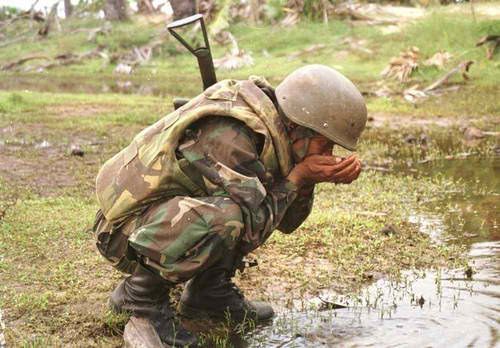
Surviving grad school: Army style

According to the US Army Survival Manual, S.U.R.V.I.V.A.L. means:

SSize up the situation. Your surroundings, physical conditions, and equipment.

UUse all your senses undue haste makes waste.

RRemember where you are. Pay close attention to where you are and where you are going, and don’t rely on others to keep track of the route.

VVanquish fear and panic.

IImprovise. See how to adopt tools to new purpose.

VValue living. Don’t give up.

AAct like the natives. Discover how they survive.

LLive by your wits. But for now, learn basic skills.

I have modified the definition above in order to suit the grad school context.

Here’s a grad school survival tip, army style!

SSize up the situation. Be always observant of the situations around the school campus, the physical facilities, location of offices, the professional and political environment, studying conditions, and equipments available.

UUse all your senses. Look around you. Listen to what others say. Taste the food in the canteen. Smell the fresh air in the school grounds. Try to feel what other students, teachers or staff are concerned about.

RRemember where you are. Always be aware of the reasons why you are in grad school. You should always be the one who knows where you are and where you are going ‘coz others won’t do it for you.

VVanquish fear and panic. When you are in such a situation, stop, look, and listen.

IImprovise. Find new ways to do things efficiently. Purchase gadgets that can make your work easier. Learn new methods or techniques that will make you productive.

VValue living. Life is worth the sacrifice. So is grad school.

AAct like the ones who have been there. Discover how students before you survive the academe. Observe them or just plainly ask them, you’ll be surprised by how much insights they can provide.

LLive by your wits. And for now, learn basic skills. I’m referring to computer skills, mathematical skills, research skills, etc.

There you have it! The soldier survives the jungle. And so does a grad student.

What do you think about this post? Tell me. There’s a comment link below.

Wednesday, February 16, 2011

5 time saving tips for grad students

Time is a priceless commodity for a grad student. So here's some practical tips on how you should save it:

1. Get started immediately- Get down to work as soon as possible.

2. Make it a routine- Designate a time every day to do certain tasks (read journals, write a paper, organize your files, etc) and do it regularly.

3. Learn how to say no- Saying yes to too many things means some other things won’t be done.

4. Divide large tasks into smaller ones- Smaller tasks are more manageable and easier to do. Eventually the larger job will be done in time.

5. Plan your activities- Proper scheduling filters out the unnecessary tasks that can cost you too much time.

I know this won’t be enough. You might have something more to add to this list. Share it here by using the comment link below.

Thursday, February 10, 2011

Top 10 time wasters for a grad student

Time is Gold. Yeah right! That’s absolutely true especially for a grad student. Most especially if you’re also working at the same time. Wasted time can never be bought back. But what usually wastes our time? Don Clark of Big Dog Leadership enumerates the different time wasters for corporate leaders. I’ve extracted 10 of them which applies to grad students:

1. Indecision- Spending too much time on deciding what course of action to take.    

2. Inefficiency- Taking the longer course of action, too much effort with little work done, not using the available tools.

3. Interruptions that do not pay off- Sometimes, a minute of interruption can cause you to spend more minutes recovering your momentum for work.

4. Procrastination- Delaying a course of action to a later time.

5. Unrealistic time estimates- Assuming that a certain work can take up less or more time than it actually does.

6. Unnecessary errors- Correcting trivial mistakes can take more time than by double checking it every now and then.

7. Poor organization- Not putting things in order.

8. Poor planning and lack of contingency plans- This leads to more time spent figuring out what to do next.

9. Failure to delegate- Doing too much of everything yourself.

10. Lack of priorities, standards, policies or procedures- Not knowing what to do with your time.

What are other time wasters aside from what’s on this list? You can share it with us. Please write your comments below.

Sunday, February 6, 2011

Why should a grad student blog?


Should I or should I not? But before you dismiss blogging as a time waster while you’re in grad school, here are some of the valid reasons why a grad student should maintain a blog:

Relieve stress. Stress is inevitable when you’re in grad school. Lots of reports, readings, and other requirements could eat you up in whole. Sometimes we need a diversion, something that takes our mind out of the academic hassles. Writing is a form of diversion. In grad school we write about scholarly topics in order to impress our professors. When you blog you write to impress yourself and your target readers. Never mind if you don’t have more than 10 readers. Somehow, somebody out of the billions of internet surfers will find your blog through a search engine. Plus, you’ll have your family and friends as loyal readers, what more can you ask for. Furthermore, nothing beats the feeling of seeing your writing being published online.

Understand technology. Let’s face it, we have to catch up with it. The internet is not just for teenagers it’s for everyone. It has revolutionized our concept of communication. When you blog, you’ll learn about the concept of web traffic, search engine optimization, social media, internet security, web programming, etc. This is a practical example of “learning by doing”.

Publish your ideas. You got into grad school because you want to be an expert of a specific field. Because of that, you are expected to have something to say that relates to your field. What better way to publish what you think about certain issues than through a blog. It’s easier, faster, and more convenient than traditional media.

Sustain your interest. If you stay in grad school within 3 to 5 years. How long can you sustain your interest in that field? Blogging helps you focus your interest in your field if you keep on posting articles related to what you are majoring in. Furthermore, blogging is not only about writing posts, it’s also about researching, editing, publishing, and marketing it. This is something that keeps you on your toes while in grad school.

Establish internet presence. Blogging is a way of showcasing your skills. What you write about tells a reader what you are interested in and what your expertise is. The growing trend in human resource recruitment nowadays is to google applicants in order to find out something about them. A blog puts your name on top of a Google search (it really does) so people interested in you (or your work) can easily find you. Try googling my name, and see the results. Moreover, an internet presence can also be a marketing strategy especially if you are offering consultancy services.

I’m not saying that blogging can be appropriate for all grad students. However, I believe that for every endeavor to be successful, it should be enjoyed by the one doing it. For someone to enjoy blogging, a good reason for doing it should be a prerequisite.

What’s your take on this post? Please do share it with us. Use the comment link below.

Thursday, January 13, 2011

Top 10 interesting quotes from UP professors

The University of the Philippines is the country’s prime mover of academic freedom. It’s where the creams of the crop go as majority would say. I never got the chance to be in UP, and I wonder what it feels like to be there. I may never know, but here are excerpts on what UP students have recorded of their professors’ wit and humor during classes. This may provide us with an idea of what a UP classroom feels like (in case you haven't been there).

My late friend Ray, who took his PhD in UP Los Baños, used to email me a collection of what UP students call ”quotable quotes” from their professors. It doesn’t say where the email originally came from (it was forwarded many times) and I don’t have any means of verification. However just for the fun of it, here are 10 of my favorites from the list. I have enclosed some English translation in brackets [ ] for the sake of our non-Filipino readers.

"Class, next week na lang ung result sa exam nyo [Class, I’ll give the results of your exam next week]. I am having a hard time checking it. I will seek first the divine guidance on what to do about it. Class, don’t worry about your grade. Let me worry about it."
- Sir de Jesus, Envi Sci 1

MA'AM: Many people believe that we, psychology graduates can read minds...
(Silence…). Actually, we can.
CLASS: Weh! Sample.
MA'AM: Right now, you think that I'm bluffin’
- Ma'am Chei Billedo, Psych

"I don't give surprise long exams. All exams are announced. Halimbawa, Class, mageexam tayo, NGAYON NA!" [Example. Class, we’ll have an exam, RIGHT NOW!]
- Ma'am Chei

"Oo, nagpapaulan ako ng uno... baket? aanhin ko ba yun? di naman ako yayaman dun." [Yes, I give perfect grades…why? What will I do with that? I won’t get rich from it]
- Sir Atoy Navarro, Histo I

"Last sem was the first time that I gave a grade of 5, and it felt good!!!"
-Prof Goldie, Comm II, circa 1998, first day of class

Atheist ako, pero pag nasa bahay, nagro rosary kami ng Nanay ko, eh kung magalit sa kin yun. [I’m an atheist, but when I’m at home I pray the Rosary with my Mom, what if she’ll get angry]
- Socio 11 Prof

"Kaya nga ideal eh, hindi siya nangyayari sa totoong buhay [That’s why it’s ideal, it doesn’t happen in real life]. Pero an approximation is good enough"
- Sir Engle, on ideal and real systems

Terror prof after an exam (last day na din ng class..): ok class.. see you next sem!

CLASSMATE: Ma'am, pwede po bang next week na kami mag report? [Ma’am can we do our report next week instead?]
MA'AM: Alam mo [You know], God is good. And I am God. So yes, pwede next week.

Ma'am Vitriolo (2nd to the last meeting)
Okay class, next week, we start the lecture proper.


----
How about you? Does something like any of these ever happens in your classroom?

Monday, January 10, 2011

News about 2 grad students: the good and the bad

Recently, I subscribed to Google’s news alert specifically on the topic “grad students”. I did it in order to be updated on whatever comes up in the news involving grad students. Interestingly enough, Google sent an email alert today, and these are the two most interesting news I have found.

1.Bad news first. Look at how university professors in Turkey allow such obscenity to stain the academe as an institution.


BBC News Europe. The news brings us to Bilgi University in Istanbul. Film student Deniz Ozgun made a porn film for his dissertation project. Obviously he failed the review.

It didn’t cause a stir at first. But Deniz gave an interview in a news magazine about how he filmed his project on campus. This caused the uproar among parents which caused the Board of Education to put pressure on the university to act.

The school has already closed its film department as well as fire three professors after the incident. (See Full Story)

2.Here comes the good news: nothing messes with academic freedom.

The Guardian. This brings us to Cambridge University. Computer security student Omar Choudary’s thesis described a flaw in the chip-and-pin (personal identification number) security system that allows criminals to make fraudulent transactions with a stolen bank card using any pin they care to choose. This was posted in the university website as is the practice for all master’s thesis after having passed the review.

However, The UK Cards Association, which represents major UK banks and building societies, asked Cambridge to remove the thesis from their website because allegedly it “places in the public domain a blueprint for building a device which purports to exploit a loophole in the security of chip and PIN.” Cambridge bluntly refused adding that they have already informed the banks about the loopholes since 2009.

Ross Anderson, professor of security engineering at the university's Computer Laboratory, in his reply to the UKCA wrote “"You seem to think we might censor a student's thesis, which is lawful and already in the public domain, simply because a powerful interest finds it inconvenient. This shows a deep misconception of what universities are and how we work.” (See Full Story)

Sunday, December 19, 2010

What is the shortest thesis or dissertation? (just for the sake of asking)

Whoever thought that panel of reviewers think that the longer theses or dissertations are (in terms of pages) the better, may be a bit misinformed. It’s not really the length that counts but the content.

I’ve been thinking of ways to find a research that would spell something big in terms of contribution to society (not big in terms of thickness of the report). What’s should be big (in terms of content) but short (in terms of pages)? But it also got me into thinking, how short is a short thesis or dissertation?

I run Google searches for some of it and found out that although there are such claims for the shortest theses or dissertations, there is no consensus as to which of it got the said title. However here are some of those claims and take note that all of these are in the field of mathematics:

1. John Nash’s dissertation on “Non-Cooperative Games” introduces a concept under the field of game theory which refers to a game having players making decisions independently and the concept of cooperating among the players is self-enforcing and not imposed upon them (Brief Introduction Here). Nash’s paper is a 32-page typewritten technical explanations of handwritten equations in which non-mathematicians (like me) cannot fully appreciate. (Download PDF File).

2. Edmund Landau’s paper entitled “New Proof of the Equation ??!!!?? (punctuations mine)” is popularly cited as the “shortest” based on my Google searches. I can’t seem to find the original version, which was in German, but here’s the 17-page English translation by Michael J. Coons.

3. C.N. Yang’s “On the Angular Distribution in Nuclear Reactions and Coincidence Measurements” is said to be the shortest by far based on my search. In the same way as the above entry, I can’t find the original version. However, after approval by his Ph.D. Committee, Yang published his scientific journal version of the said paper in Physical Review as is the standard practice in most universities. Journal versions most probably have minor revisions thus we can deduce that there is really not much modification from the original dissertation version. You can download the 9-page journal version.

However, I’m not claiming that my search have really been as fruitful as yours. If you think there are other dissertations as short (or even shorter) as those mentioned above, please post those info here using the comment link below.

Sunday, December 12, 2010

Top 5 Computer Tips for Grad Students

To complement my previous post “Computer: a grad student’s best friend”, I compiled some tips in order to efficiently put your computer into good use while in grad school.

Here are the top 5 on my list:

1.Manage your files efficiently. Always do some housekeeping with your files. Discard some unnecessary files. Categorize your files into subjects and create folders for each. And always create back up CD’s or DVD’s of these files at least every month.

2.Manage your email too. Our email accounts have inboxes. However, why do we keep on filling it up with messages we have already read. Try to save read messages somewhere such as folders in your email account. Or better delete it if we don’t need them in the future. The inbox should always be empty just like our physical mailboxes.

3.Don’t exaggerate your PowerPoint presentations. Avoid elaborate slide designs, too much text in a slide, too much animation and sounds. Too much detail is a waste of time.

4.Use search engines efficiently. When you use Google to search for a webpage on a certain subject, don’t type the whole question “What are the different theories of education? Instead use keywords such as “education theories”. This will narrow down your search. Instead of looking for the question, Google will search for pages that contain what you are really looking for in terms of keywords you supply.

5.Don’t clutter your computer desktop. A cluttered desktop is a definitely a mess. Try to transfer some files you won’t be using for a long time. Leave only files that you use frequently in the desktop.

A good computer unit will make our grad school tasks faster and easier. That is if you use it efficiently. If not then it can even do more harm than good.

What are other computer tips that you can share with your fellow readers? Use the Comment link below.

Saturday, December 4, 2010

Computer: a grad student’s best friend

Computers are a must for graduate students nowadays. Want to know why? Here are some instances in a grad student’s life when you would definitely need a computer:

• A decade ago statistical computations for grad researches are done either manually or with the help of a scientific calculator. You’ll need pages of scratch paper for this. Nowadays, statistical software such as SPSS, SAS, STATA, and Minitab can compute large amounts of data in seconds.

• Before, presentations by grad students are supplemented by visual aids specifically pieces of manila paper or cartolina (think “BitayMax”). Bullet points are written on it with permanent markers. Imagine what a tedious job it is to prepare pages of that for a 15 minute presentation. Now we have the manna for every grad student, PowerPoint. Pages of visual aids become virtual slides projected into an LCD screen for a small to large audience to see.

• Imagine typing your research paper or even your thesis or dissertation in a typewriter. This is what actually the case is some decades ago. How would you try to type in the page numbers, tables, charts, figures, or diagrams in a typewriter? Imagine the tons of correction paints you need to cover some typographical errors? Maybe that’s the reason why some grad students during that era dropped out of grad school during thesis or dissertation time.

• The arrival of the internet into our lives is what every grad student should celebrate. eBooks, PDF files, and web pages of every topic we can ever imagine can be surfed, browsed, and searched in the World Wide Web with just a few strokes and few clicks.

I entered graduate school for my master’s degree in 2001. Laptops were rare during that time. Even buying a desktop can shave out Php 30-40 thousand out of your pocket. A 128 MB USB drive costs more than a thousand pesos during that time. But I managed to save all my files in 3.5 floppy disks. However to make sure these files are secure, I saved them in my email. It’s all about file management.

Now laptops are everywhere. Desktops are cheap. USB drives can reach up to 16 GB in capacity and can still be affordable. Can’t see no reason why a graduate student won’t invest in a dependable computer set.

In my next post, I'll try to share some useful tips in making your computer useful for grad school.

Monday, October 18, 2010

10 Celebrities Who Have Been To Grad School

We may have known of Boy Abunda presently taking up his master’s degree, or Herbert Bautista’s master’s degree from UP. Are their other celebrities who have been to the jungle?

I hope this would be an interesting list for you.

Here’s the partial and unofficial list of local and international celebrities who have been to grad school in no particular order:


Claire de la Fuente. She is a famous Filipino pop singer in the 70’s with such hits as “Sayang” which earned her the moniker “Karen Carpenter of the Philippines”. She has an MBA (Masters in Business Administration) from the University of Western Australia.


Boy Abunda.
The famous TV host and manager of Filipino celebrities is currently working on his master’s degree in International Relation on Public Diplomacy at the Philippine Women’s University.


Tetchie Agbayani
. The talented movie and television actress also teaches Psychology at St. Joseph’s College, Quezon City. She has finished all the academic requirements for her Master of Arts in Psychology with concentration in Counseling Psychology at the Ateneo de Manila University. She is currently working on her master’s thesis.


Grace Nono
. This Filipino female folk music singer has taught Oral History in Miriam College as well as Philippine Traditional Arts in UP-Diliman. She has a master’s degree in Philippine Studies from the University of the Philippines.


Agot Isidro
. The famous recording artist, actress, host, and TV personality has a master’s degree in Communication from Ateneo de Manila University.


Herbert Bautista
. This successful movie comedian turned politician is now mayor of Quezon City. He in fact has two master’s degrees: Master of Arts in Public Administration (UP-NCPAG) and a master’s degree in National Security Administration from the National Defense College of the Philippines. He is currently working for his doctorate degree in Public Administration and Governance at UP-NCPAG.


Dolph Lundgren
. He was famous short of being a superstar back in the 1980’s. He came back into the Hollywood limelight as the disgruntled mercenary friend of Sylvester Stallone in “The Expendables”. However, despite having a fearsome giant image, he reportedly has an IQ of 160. He has a master’s degree in chemical engineering from the Royal Institute of Technology in Sweden. He was also a recipient of a Fulbright Scholarship to MIT. After two weeks at MIT, he dropped off his scholarship and got into Hollywood.

Dexter Holland
. He is the frontman, singer, and rhythm guitarist of the famous California punk rock band “The Offspring”. Prior to forming his band, Dexter earned his master’s in Molecular Biology from the University of Southeastern California. He was working on his PhD when he decided to focus on his band.


Brian May
. He is the musician, guitarist and songwriter of the classic rock band “Queen”. He studied physics and mathematics at Imperial College in London. During the success of Queen, he stopped his PhD in physics at the same university. Thirty years later, he finished his uncompleted PhD thesis entitled “A Survey of Radial Velocities in the Zodiacal Dust Cloud”, and obtained his doctorate degree.


Bill Cosby
. This famous American comedian, actor, TV producer, author, and activist has a doctorate in education. He finished a special doctorate program at the University of Massachusetts for students who haven’t finished a bachelor’s degree but had a significant impact to society throughout their career. His dissertation was a study about one of his shows: “An Integration of the Visual Media via ‘Fat Albert and the Cosby Kids’ Into the Elementary School Curriculum as a Teaching Aid and Vehicle to Achieve Increased Learning”.

These are just few of what I could find from a few hours of internet research. If you have someone to add on to this list, please do so by clicking on the comment link below this post.


Photo taken from: (in order of appearance)
www.clairedelafuente.com, www.abs-cbn.com, www.pep.ph, www.gracenono.com, www.abs-cbn.com, www.herbert-bautista.com, www.dolphlundgren.com, www.offspring.com, www.brianmay.com, www.billcosby.com

Tuesday, October 12, 2010

Top 10 Grad school acronyms and jargons


If the online community has its own cute and cool lingo (btw, pm, lol), grad school also has its own equally interesting acronyms and jargons. Here are the top 10 on my list and their meanings.

A.B.D.

This means “All But Dissertation”. This refers to a PhD student who has passed all his/her academic course requirements except dissertation. (Juan de la Cruz, PhD (ABD). Same with C.A.R. Below.

Academic master's degrees

This refers to the Master of Arts (M.A.) and Master of Science (M.S.) degrees on specific disciplines. This is the prerequisite to the doctorate degrees.

Candidate

A student who is currently working on his/her graduate degree. (Juanito de la Cruz, MBA Candidate)

C.A.R

Means “Complete Academic Requirements”. A grad student who has finished all the needed academic course requirement except the thesis or dissertation. (Juana de la Cruz, M.P.A. [CAR]). See Also A.B.D.

Compre

A term used for the “Comprehensive Exam”, an exam prepared by select professors in order to test your competencies as grad students given the coursework you have experienced. This could either be a written or oral exam or both.

Defense

This refers to an oral presentation to a panel of professors. In here you present a summary of your thesis or dissertation including your results, conclusions and recommendations. Questions are given by the panel regarding your study.

Dissertation

This is another name for thesis (See Below). However, dissertation is to a doctorate degree as thesis is to a master’s degree. (In the U.K. and Australia, these terms are interchanged)

Refresher Course

An academic course you have to enroll in after a long period of absence from grad school. It is meant to “refresh” your mindset on graduate school. This will also mean that “a lot of things have changed while your gone, so better catch up on it”.

Ph.D.

This means doctor of philosophy. This is an advanced degree after a master’s degree. This requires long years of coursework and a dissertation.

Thesis

In one sentence this refers to “a long research paper”. This is mostly required for a master’s and a must for a doctorate degree (dissertation). This is an academic masterpiece, your original and significant contribution to the knowledge in your discipline.

There may be other grad school acronyms and jargons you have in mind right now. Kindly add to this list by using the comment link below.

(Photo from: softwareselection.technologyevaluation.com)

Sunday, October 10, 2010

The Comprehensive Exam: Grad School’s Gatekeeper

“walls are there to stop the people who don’t want it badly enough”.
-Randy Pausch, the late great Carnegie Mellon University Professor
~
The comprehensive exam for graduate students is dreaded notoriously. After completing your academic coursework, you have to pass an exam prepared by select professors.

My comprehensive exam took three days. An exam meant to measure my competencies after completing my academic requirements that took me more than 2 years to finish.

Weeks before the exam, I was shaking. Days before it, I was trembling. And hours before that, tremors in my stomach and chest can be felt by my wife two feet away.

But why should I feel that way? It came to mind that the harder the exam is, and I still pass, then the more deserving I am. It adds more to my competence as a scholar. Then it just means that I truly deserve it.

That is the reason why guards are posted in high walled gates: to keep others from coming in. I mean if you really belong inside the premises then you would be let in.

I would surely love to come inside that gate, whatever is inside of it.

Earning a PhD is tough. One reason is the comprehensive exam. You have to review all the concepts and principles you learned from your coursework. You then have to figure out how this would be used in the real world. Some professors gave hints that the exam was really all about applications of these concepts.

I have to learn and relearn the Keynes models and such theories by Rostow, Smith, Ricardo, and Lewis coupled with some modern theories by Stiglitz and Lipton. Then I have to figure out some multivariate data analysis techniques such as multiple linear regression, logistic regression, factor analysis, cluster analysis and the likes. But that’s not enough; I’ll have to think of ways how these will be used in the realistic sense. Then I have to study some concepts I have never been really able to figure out yet: log frame analysis, benefit cost analysis, financial analysis, the list is growing as the exam comes closer.

The problem with taking the exam is exactly what “Forrest Gump” usually says: It’s like a box of chocolates; you’ll never know what you’re gonna get. So you’ll have to be prepared in every angle. Leave no stone unturned. And how did I do that? Honestly I can’t recall.

I realized that it will only take me 3 days to topple down what I have built for more than 2 years. I have to strive harder because this is my dream and what lies between me and my dream is the gatekeeper that let’s only the deserving one’s enter.

Now I believe why Randy Pausch said those words. Only the one’s who deserves it can enter and the most deserving are also the most determined. Fear is just an illusion, a mirage to make you think you don’t deserve it. But it’s not really there. Sometimes our own motivation and determination can put that ghostly figure away so that the gatekeeper can open that door.

And so I passed.

(photo from: www.home-finish.com)

Thursday, October 7, 2010

Top 7 Grad School Tips


For those who have been planning to get into grad school. Why waste your time procrastinating? Decide now or regret later. It’s the most wonderful thing that could happen to your career. You have more to gain than to lose for such endeavour.

For those of you who have already decided. Be prepared for several changes in your life. In order to go through such grad school trials, here are some grad school tips for you from someone who has been through the jungles of grad school:

1. Create a timeline for finishing your degree. A Gantt chart would be a great solution for this. This will give you a broad perspective on what you will be doing for the next 3 years or so in your life at grad school.

2. Choose the best grad school for you. Do you like to live near your school? Is it okay for you to travel regularly? What type of professors would you want to teach you? What type of classmates/peers do you want? What types of programs do you want to enrol in? Can I afford financing my graduate education? These are some of the questions you have to answer first in choosing what school is best for you.

3. Ask support from your family. Be it financial, material, or moral support, you definitely need that to go through grad school.

4. Be computer literate. Grad school is now modernized through the use of computers. Professors communicate through email now. They send soft copies of lessons instead of printed ones. Sometimes you have to submit only electronic copies of research papers. You will also be tasked to present topics in class of which knowledge in PowerPoint is a must.

5. Socialize. Be friends with peers/classmates. They will be your allies in the coming years.

6. Manage your files efficiently. In grad school, you will accumulate tons of paper in no time. Handouts, lecture notes, photocopied books, journal articles, etc. Create a good filing system for these so that you can easily retrieve them in the future. Think about your school library. That’s how you should manage it. I promise you will have a library at home after grad school.

7. Start studying independently. You won’t get much group study sessions from grad school. All your peers are busy too. Plus teacher driven lectures are not as many as in college. In fact some courses have no lectures. So learn to study on your own.

Grad school is a wonderful experience. Though some are afraid or hesitant in going through it, people who have been through it tell wonderful stories of their unique experience in grad school. It’s much better than college.

Do you have some tips you can add to this post? Don't hesitate to share it. Click the Comment link below.

(Photo from: cdn.venturebeat.com)

 
Powered by Blogger